

Your AI built a world it was never shown. Now stop letting it grade its own homework.
In a world of confident AI, Compact provides a hard edge of reality.


Show a machine nothing but lists of moves from a board game. No board. No rules. No picture of anything. Just coordinates, game after game, the way you might hand a stranger a million chess games written out as plain notation and walk off without a word.
Then open it up. There is a board inside it. A model of a thing nobody ever showed it, built for one reason: guessing the next move got easier once it had one. And here is the part that should keep you up: you can reach in, nudge a piece in its imagination, and its predictions shift to match the board you edited, not the one the moves implied. It is not reciting. It built a small private world so it could predict yours.
That is roughly what Claude is doing when it writes your code. Not looking things up. Modelling.
So here is the first fight, and it is a real one. Is the thing actually understanding anything, or is it a very expensive parrot stitching together likely words with nothing underneath? Pick a side for a second. Because the parrot camp has a problem, and the problem is that board. A pure mimic that only ever saw move lists had no reason on earth to invent a board. Stitching surface patterns would have done the job badly. Building a working model of the game was the expensive option, and it took it anyway.
Which leaves a genuinely uncomfortable thought on the table: maybe understanding is just what compression looks like from the inside. Squeeze any system hard enough to predict something complicated, and the cheapest way to win is to build a small working copy of whatever makes the data. You do exactly this. You did not memorise every sentence you ever heard, you built a model of language and the world and you run it. So is the machine thinking? Honestly, who cares what we name it. The name does not change what it can do to your contract. What matters is the next bit.
A model is dazzling at the middle of the world it saw and clumsy at the edges. It watched the ordinary stuff a million times and the rare stuff almost never. Its one real talent is predicting the likely next thing. And most days, likely sits close enough to true that you never feel the seam.
Midnight is the seam.
A privacy chain, a young language called Compact, zero knowledge rules that almost nothing in the training data ever got right. To a model, the whole thing is edge. The rare tail. The exact place it is weakest, wearing the same confident voice it uses for the things it knows cold. Ask it for a contract and it hands you the most likely looking Compact, which is a different animal from Compact that compiles, proves, and keeps the secret it exists to keep.
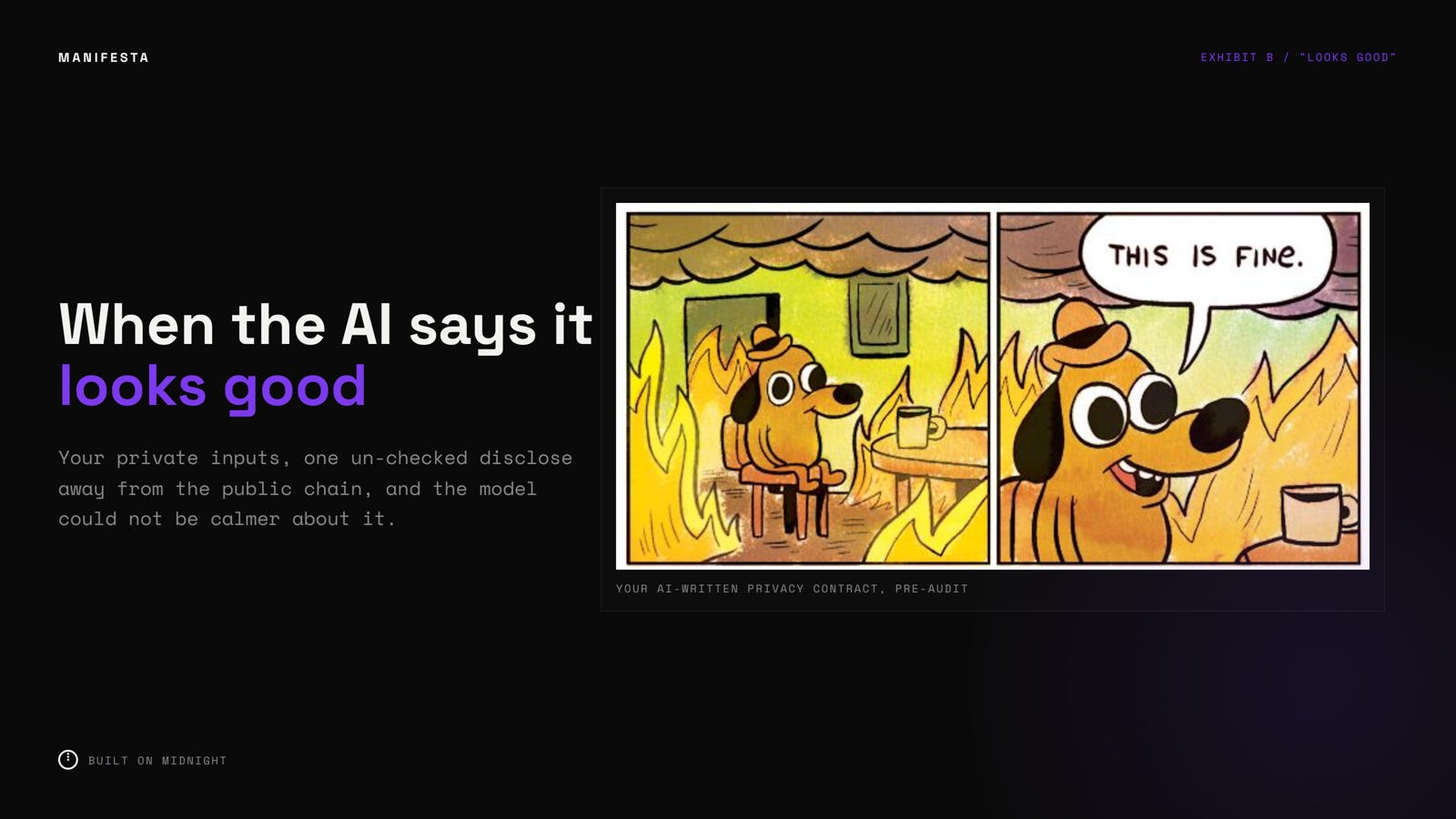
And here is the twist that makes Midnight different from your usual stack. Compact is private by default, and the compiler is paranoid on purpose. There is a function called disclose. If a value came from your secret inputs, the compiler will not let it touch the public chain unless you physically wrap it in disclose and sign for it. Sit with that. The language assumes you are one careless line away from leaking the thing the whole network exists to hide, and it refuses to move until you say the quiet part out loud. A compiler that argues with you. When was the last time your tools cared whether you were about to do something stupid?
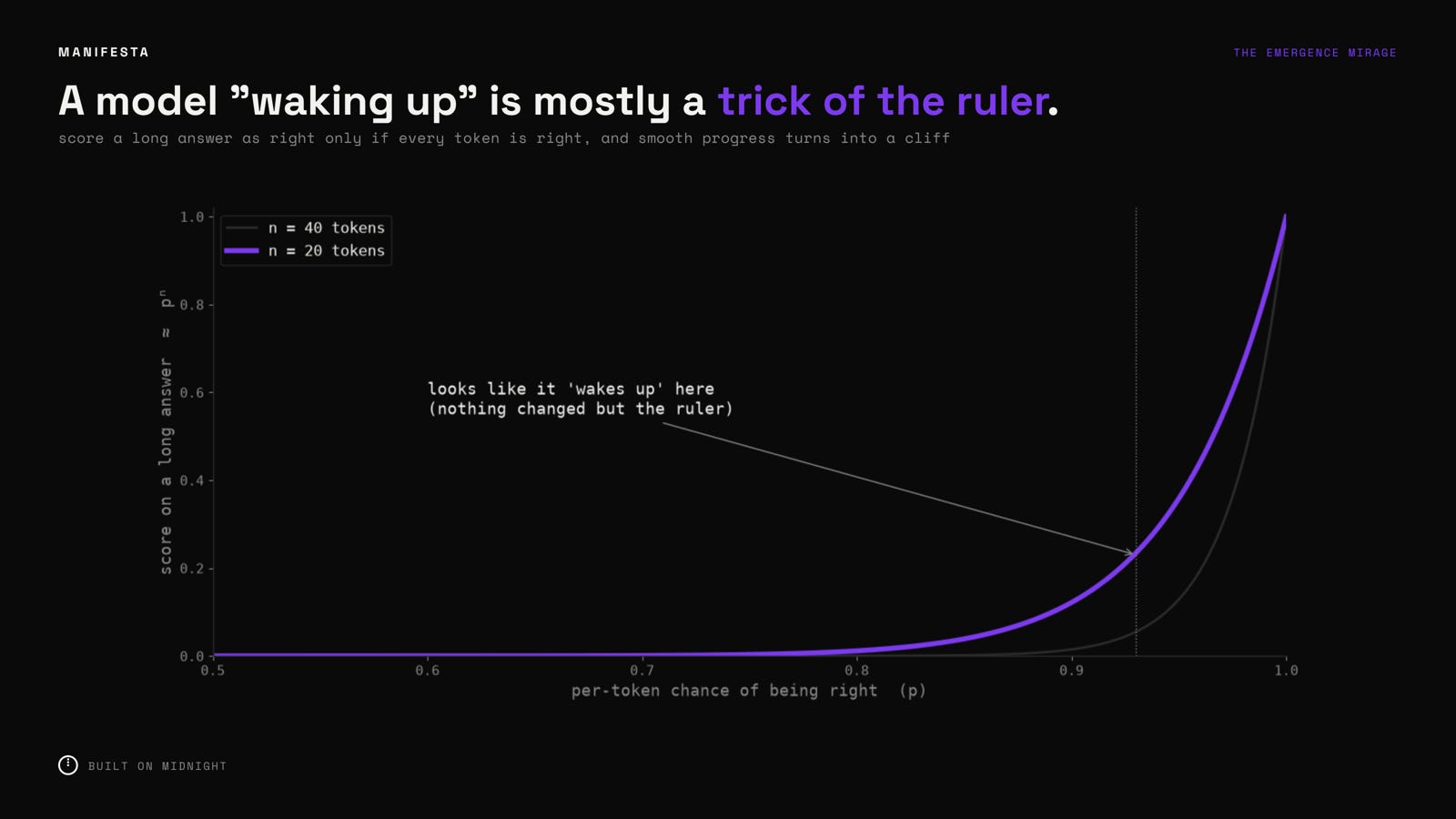
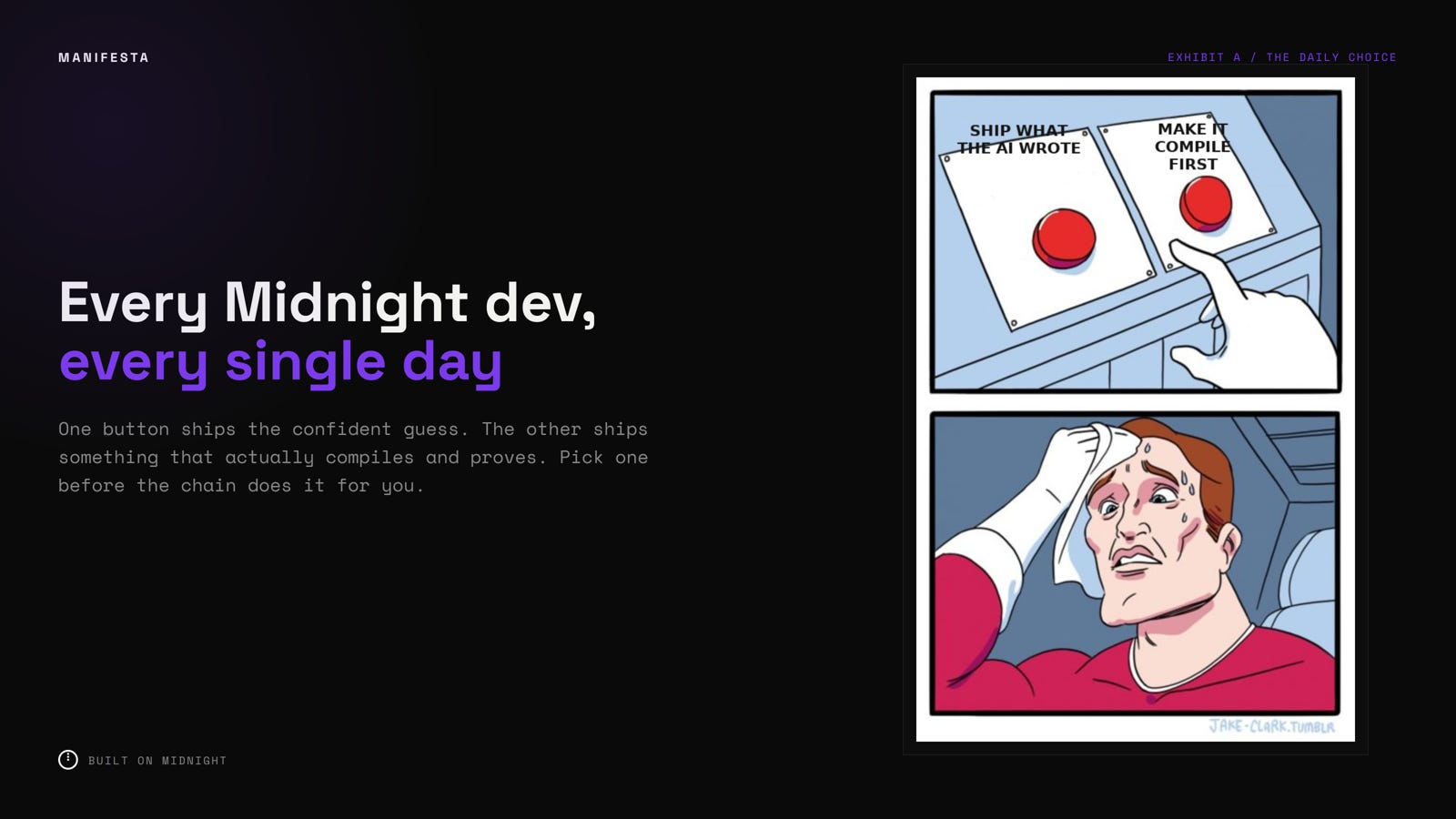
Now the confidence trap, with the smallest bit of maths, because the maths is the punchline. Score a long answer as correct only when every single token is correct. Say the model is right 90 percent of the time per token. A twenty token answer then scores 0.9 to the 20th, which is about 0.12. Lift it to 95 percent per token and the same answer jumps to roughly 0.36. The model crept up smoothly. The score leapt. That is where most of the breathless “it suddenly became an expert” charts come from: not a mind waking up, just a cruel ruler. So ask yourself honestly, how many times have you trusted an answer because it sounded sure, on exactly the kind of rare, edge case problem where sounding sure means least?
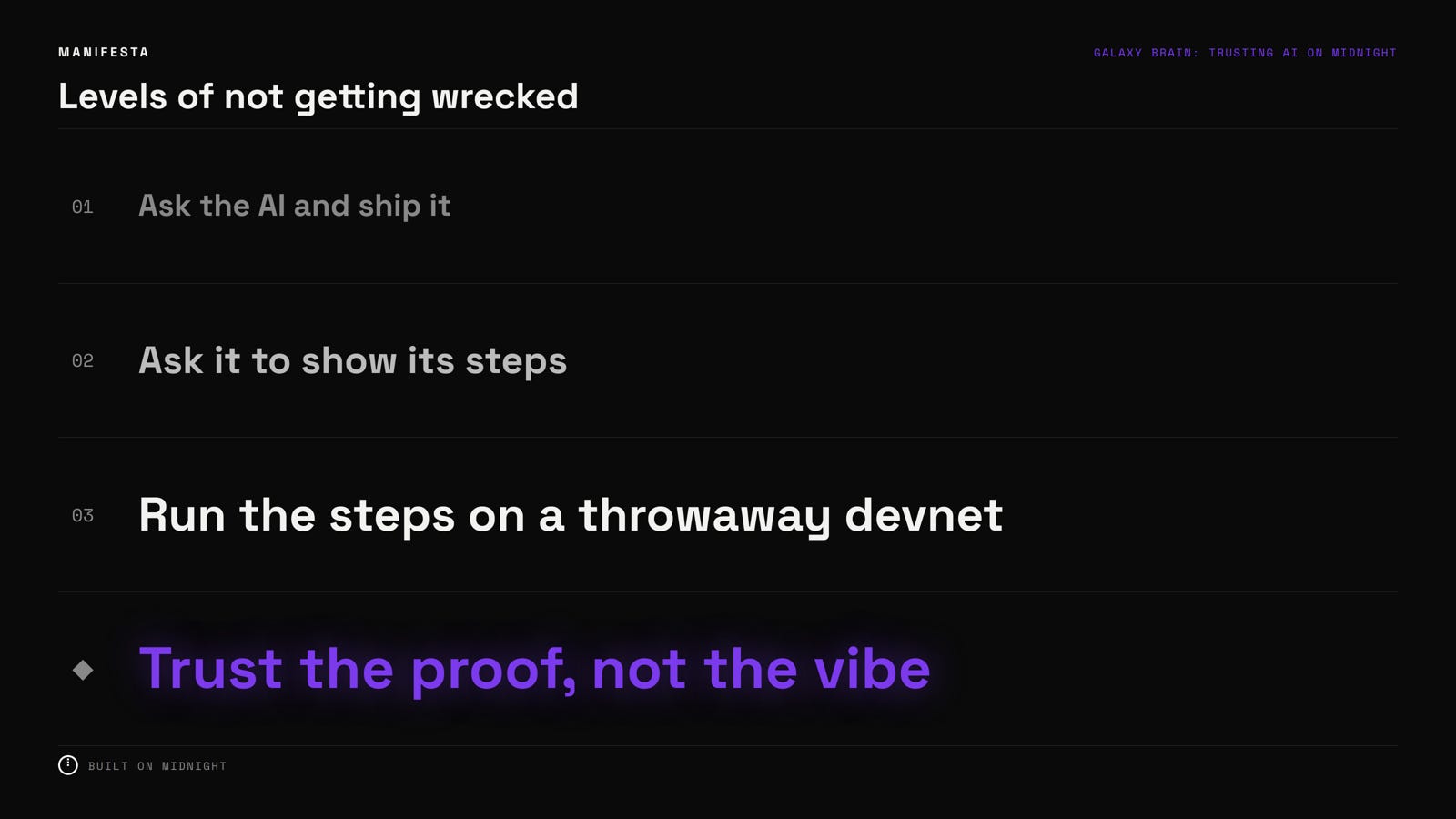
So what actually helps. Not a bigger brain. The oldest trick from school. Show your work.
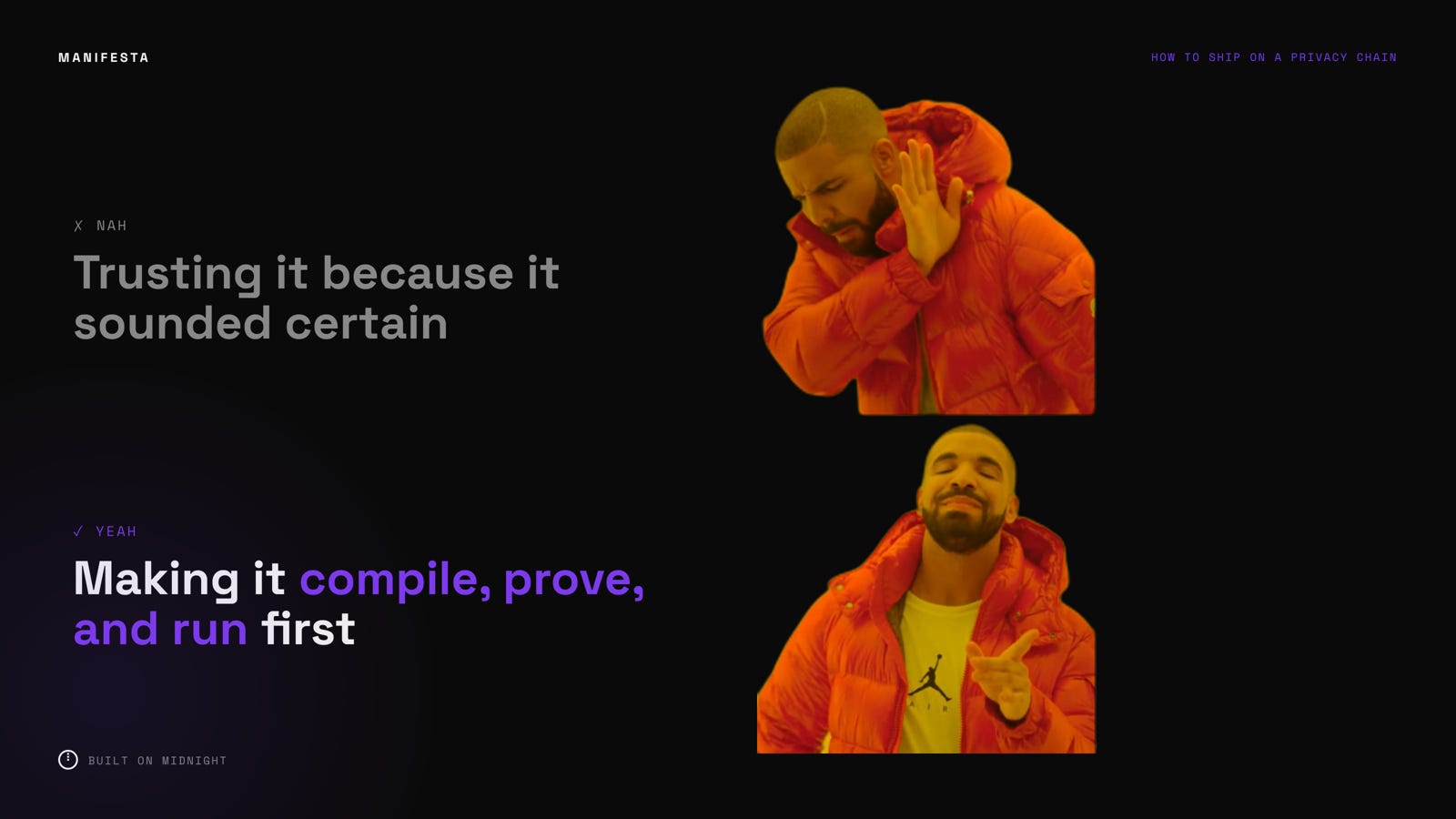
Make a model lay out the steps instead of blurting the answer and accuracy climbs, because the reasoning is where the mistake finally becomes visible. Then go one further than any classroom ever could. Take those steps and run them against something that cannot be flattered.
That is the whole idea behind Midnight Expert, an open and free pack of plugins that turns Claude from a confident intern into one that shows receipts. Ask it for a contract and it does not stop at “looks good.” It compiles the thing. It type checks the witnesses, the private inputs, against what the contract actually expects. It generates a real zero knowledge proof. It spins up a throwaway network and runs it. And it counts the gates, so you see what your code truly costs before a single user does.
Why does counting gates matter. Because a Compact contract is not a normal program, it is a fixed circuit, and that changes the bill in ways the model will never warn you about. Write a loop and the compiler does not loop, it unrolls, stamping out a copy of the body for every iteration. Put a loop inside a loop and the copies multiply, ten by ten is a hundred, not twenty. Reach for the wrong hash and the same line can cost ten to fifty times more, because one speaks the circuit’s native math and the other drags SHA 256 through hundreds of little gates. None of that shows up as an error. It compiles, it runs, it quietly costs you, and the bill lands in production. A confident model walks you straight into it with a smile. A model that compiles, proves, and counts hands you the number first.
Translate that into something you can do on Monday. Stop asking your AI “is this right.” It does not know, and it will tell you yes in a lovely voice. Ask instead “does it compile, does it prove, what does it cost,” and make the tool answer with the compiler, not its mood.
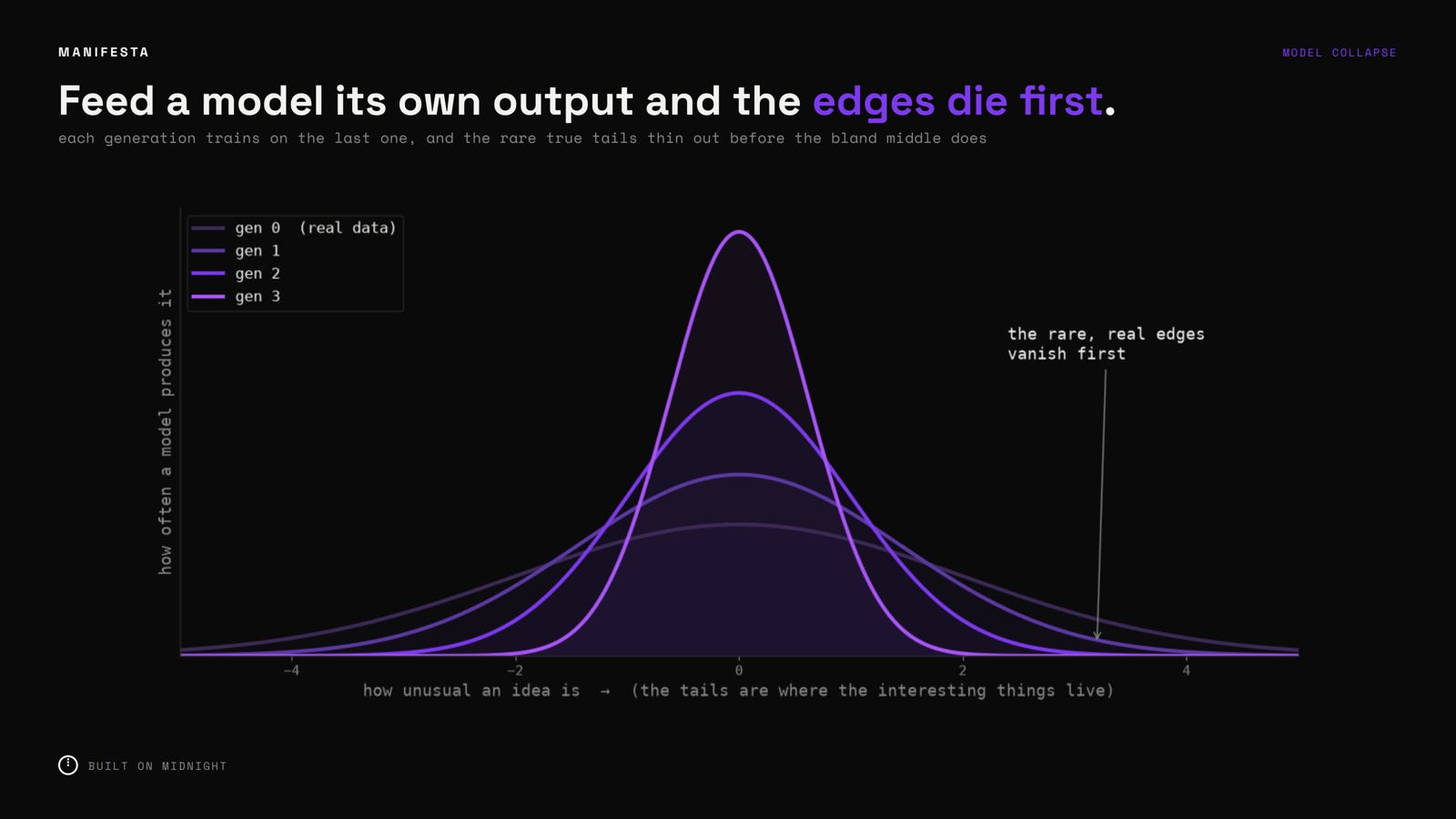
Then zoom out, because there is a slower fire under all of this. The internet is filling with machine written text and machine written code, and the next models will train on it, and the ones after on theirs. The snake has found its tail. When models learn from models, the rare true edges thin out first, generation after generation, until the bland middle eats the lot. The scarce resource in that world is not intelligence. It is ground truth. A hard edge of reality the machine cannot smooth talk its way around. So what is your hard edge? On Midnight, it is a compiler that says no and means it.
The miracle and the warning live in one sentence. Claude can build an entire world to predict yours, which is the exact reason you should never let it be the one to tell you whether that world is real.
Show me the board. Then show me it compiles.
Special thanks to MANIFESTA for writing and editing this article.
 | A guest post by
|