

Why Privacy ≠ Anonymity (And Why The Difference Matters)
The internet confused these ideas for years, and crypto is finally forcing people to separate them.


Most people treat privacy and anonymity as if they mean the same thing. In everyday conversation, the two words get blended together until they feel interchangeable. But they describe completely different ideas.
Understanding that difference matters. Once you separate the two properly, many debates around crypto, digital identity, and online freedom become much easier to understand. The confusion has also created a strange cultural shift where privacy is often treated as suspicious behaviour, while mass data collection somehow became normal. That inversion deserves a closer look.
Privacy Is About Control
Privacy is not about disappearing from society or becoming invisible online. At its core, privacy is about control. It means deciding what information you share, who can access it, and when it should be revealed.
You already practise privacy every single day without thinking about it. You close the bathroom door, use passwords, and lock your phone. You probably do not post your banking history on social media every Friday night either.
None of that makes you anonymous. People still know who you are. Your employer knows your name, your bank knows your account exists, and your friends recognise you instantly.
Privacy simply creates boundaries around information that does not need to be public. That distinction matters because many people now associate privacy with secrecy or criminal intent. In reality, privacy is normal human behaviour, and healthy societies depend on it.
Anonymity Is Different…
Anonymity is about hiding identity itself. If privacy means controlling information, anonymity means removing the connection between actions and the person performing them.
A masked street artist can be anonymous. An anonymous whistle-blower can release documents without revealing their identity. Someone posting online under an alias may also be operating anonymously.
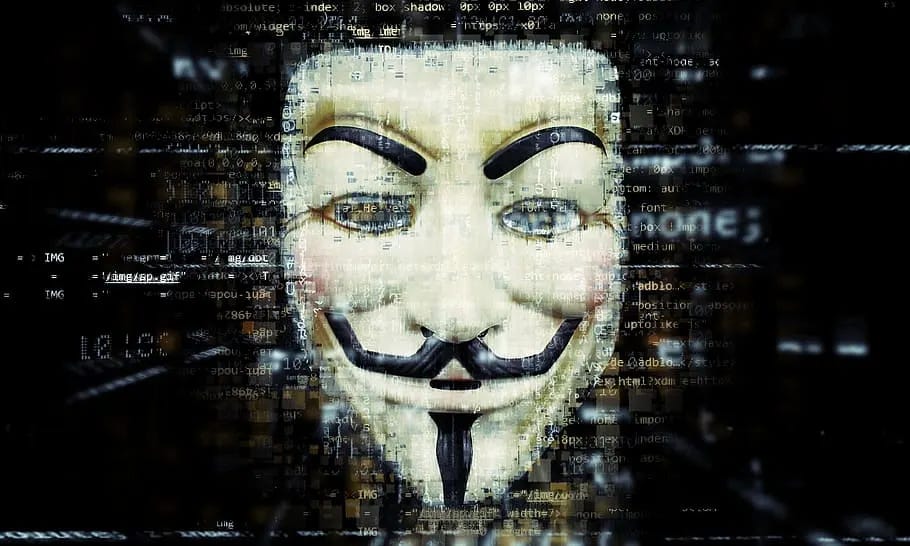
The important distinction is simple. Privacy protects information, while anonymity protects identity. The two ideas can overlap, but they are not the same thing.
You can have privacy without anonymity. You can also have anonymity without much privacy at all. Once separated properly, the difference becomes much easier to understand.
The Internet Accidentally Broke Privacy
The modern internet runs on data collection. Most websites, apps, and platforms gather enormous amounts of information because data became one of the most valuable resources in the digital economy.
Companies track clicks, locations, purchases, browsing habits, behaviour patterns, and personal preferences. Over time, people slowly accepted this as normal. That acceptance quietly reshaped how society thinks about privacy.
The strange part is that society became more comfortable with corporations collecting personal information than with ordinary people wanting privacy in the first place. Somewhere along the way, asking for privacy started sounding suspicious, while surveillance became part of the background scenery.
Today, entire business models depend on learning as much about users as possible. The more information collected, the more predictable behaviour becomes. In many ways, the internet evolved into a giant behavioural prediction machine wearing colourful user interfaces.
Crypto entered that environment with a very different philosophy.
Blockchain Created A New Problem
One of blockchain’s biggest strengths is transparency. Public chains allow anyone to verify transactions independently without trusting a central authority. That openness creates security, auditability, and credibility.
But transparency also introduced a major trade-off. Many blockchain networks expose transaction histories, wallet balances, and activity forever. Even when wallets are pseudonymous, tracking tools can often connect behaviour back to real people over time.
That creates an uncomfortable tension. People want systems that are verifiable and trustworthy, but they also want reasonable control over their personal information. Most users do not actually want every financial interaction permanently visible on a public ledger.
This is where Midnight Network starts becoming quite interesting. They are building systems where privacy can exist alongside verification instead of against it.

Privacy Does Not Mean “Nobody Knows Anything”
This is where many crypto discussions fall apart. When people hear the word “privacy,” they often imagine a completely invisible system where nobody can verify anything and bad actors operate freely in darkness.
That is not what privacy-focused technology is trying to achieve. Modern privacy systems are increasingly built around selective disclosure. Users can reveal specific information while still protecting unnecessary details.
Someone could prove they are old enough to access a service without revealing their exact birthdate. A transaction could be validated without exposing every detail publicly. A user could prove compliance requirements without broadcasting their full identity online.
That is not the same thing as removing accountability from a system. It is about reducing unnecessary exposure while still maintaining verification.
Midnight focuses heavily on this idea because the future of digital systems may depend on balancing transparency with human privacy instead of forcing people to sacrifice one for the other.
Its architecture is designed around a dual public and private state model. Certain information can remain private while proofs and verification data still interact with the blockchain. That balance is becoming increasingly important.
Why This Matters More Than Ever
Artificial intelligence, facial recognition, behavioural analytics, and large-scale data collection are expanding rapidly. At the same time, people are uploading more personal information online than ever before.

That combination changes the importance of privacy entirely. Information that once seemed harmless can now be combined, analysed, and interpreted at enormous scale. Small fragments of personal data can build surprisingly detailed pictures of someone’s life, habits, beliefs, and behaviour.
In that environment, privacy becomes less about hiding and more about maintaining healthy boundaries. Most people do not want complete anonymity. They simply want reasonable control over how much of their life becomes permanently visible, searchable, and monetised.
Final Thoughts
The internet spent years collapsing privacy and anonymity into the same conversation, even though they solve very different problems. Privacy is about control, while anonymity is about identity.
Once you separate those ideas, many crypto debates suddenly become easier to understand. Projects like Midnight are not trying to create a lawless invisible internet where nobody can verify anything.
The larger goal is much more practical. Build systems where people can prove, participate, and interact online without exposing every detail about themselves in the process. That future probably sounds a lot more reasonable than most people realise.