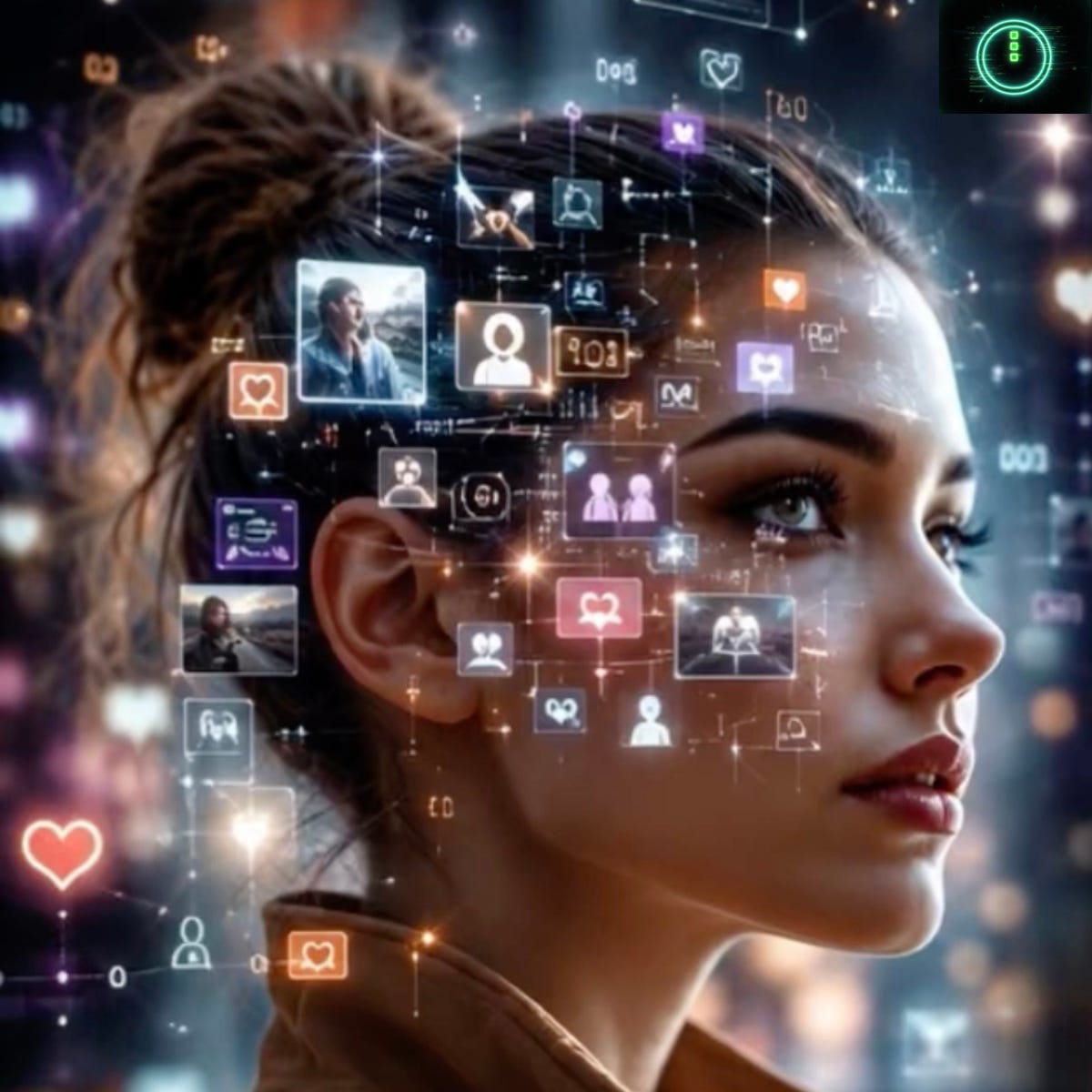
The Conversation That Changed How I Think About Digital Privacy

Digital privacy is not a new concern. For years, it has quietly existed beneath the surface of our everyday online lives.
Most of us have clicked the “Accept All Cookies” button without a second thought simply because it was faster than reading the fine print or customizing our privacy settings. We trade personal information for convenience almost instinctively.
I know I have.
Sometimes you just want to open a website, accomplish what you came to do, and move on with your day. The cost of that convenience, however, is often invisible.
Today, that conversation is becoming much harder to ignore.
The rapid rise of artificial intelligence has pushed digital privacy into the mainstream. New AI models, applications, and protocols seem to appear every week, evolving faster than most people can keep up with.
As AI becomes integrated into everything from search engines to healthcare, to finance, to business operations, concerns about data ownership, personal sovereignty, and privacy continue to grow.
The reality is that AI is advancing far faster than meaningful regulation. As a result, protecting our digital identities is becoming one of the defining technological challenges of our time.
This is where Midnight enters the conversation.
Midnight is the privacy-focused partner chain of the Cardano blockchain.
Built using advanced cryptographic technologies, including zero-knowledge proofs, Midnight enables developers to create applications that protect sensitive information while still allowing necessary verification.
Rather than forcing users to choose between privacy and transparency, Midnight makes it possible to achieve both through selective disclosure.
Its potential applications span a variety of use cases and industries.
From protecting medical records and corporate trade secrets to safeguarding journalists, whistleblowers, financial information, and digital identities, Midnight provides a practical way to do it all.
As a Midnight Nightforce Leader, I have the privilege of introducing people from all backgrounds to these technologies and explaining why privacy-preserving infrastructure matters.
Recently, I hosted an event to educate my local community about Midnight. After the presentation, a recent computer science graduate approached me. During his studies, he said one question continually stayed with him: How do we protect people’s digital privacy?
Of all the specialties he could have pursued after graduation, privacy was the one he believed deserved the most attention. He had never heard of Midnight until he came across my event announcement in a local community forum.
That conversation stayed with me.
Hearing someone at the very beginning of a technology career identify privacy as one of the most urgent challenges facing our digital future reinforced why this work matters.
It reminded me that concern over digital privacy is no longer limited to cybersecurity professionals or blockchain enthusiasts. It is becoming a broader societal concern.
Think about how much of our daily lives now exist online. We pay bills, visit doctors, shop, communicate, search for information, navigate cities, and manage our finances digitally.
Each interaction creates another piece of data. Individually, these fragments may seem harmless, but together they form remarkably detailed profiles about who we are, often collected without our full awareness or meaningful consent.
This isn’t an argument against innovation. Quite the opposite.
Privacy should be viewed as foundational infrastructure for the next generation of digital services.
As artificial intelligence, decentralized applications, and digital identity systems continue to expand, trust will become one of the most valuable assets any platform can offer.
People want confidence that their information remains secure, that they control their own data, and that proving something about themselves does not require exposing everything about themselves.
That is the vision Midnight represents.
By combining zero-knowledge proofs with selective disclosure, Midnight enables developers to build applications where privacy and accountability complement one another instead of competing.
The future of digital identity is not about collecting more information. It is about revealing only what is necessary and allowing that decision to be up to each individual.
As our digital lives continue to expand, privacy will no longer be a luxury or an optional feature. It will become an expectation. Building secure, verifiable, and privacy-preserving digital systems is not simply good technology. It is essential.
And that is why solutions like Midnight deserve a central place in the conversation about our digital future.
If you’d like to learn more about Midnight and the future of digital privacy, visit
Join the Midnight Discord to continue the conversation: https://discord.gg/midnightnetwork